
A single end-to-end score tells you the agent got the final answer right. It does not tell you how. A correct response can sit on top of the wrong topic, a skipped action, or a tool call that failed silently, and one aggregate number will hide all of it.
Regression testing exists to catch behavior changes between releases. If routing, action execution, and response quality share one score, a real regression in one layer can be masked by stability in the others. Each layer needs its own outcome and its own pass bar.
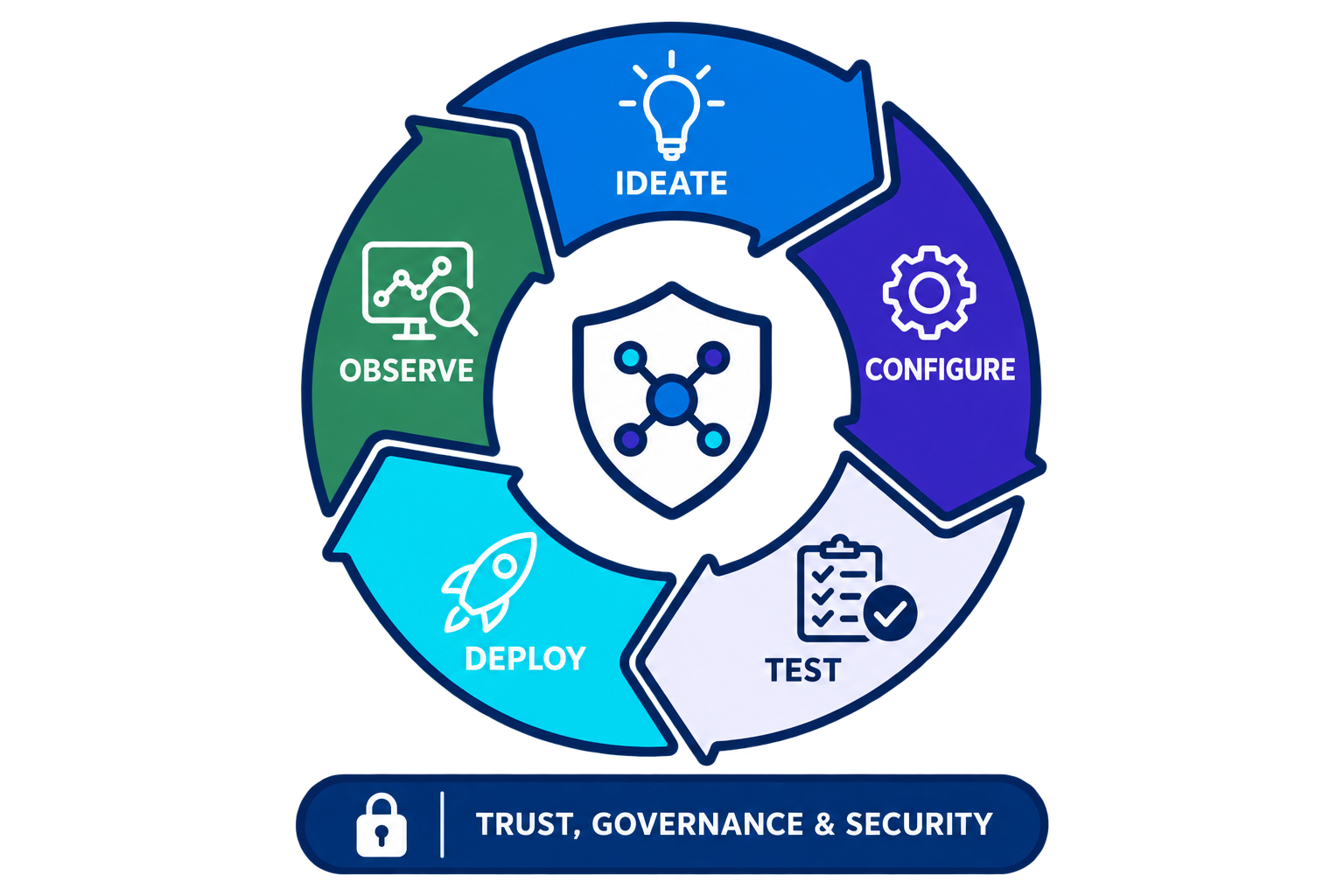
Treat each layer as its own outcome
- Topic routing is correct when the agent selects the intended topic or classifier path for the input.
- Action execution is correct when the agent invokes the right action, with the right inputs, and handles the result.
- Response quality is correct when the final message is accurate, grounded, complete, and on topic.
- A failure in any one layer is a regression even when the final answer still looks acceptable.
Score and gate each layer independently
- Build test sets in the Agentforce Testing Center that assert the expected topic, the expected action sequence, and the expected response content separately.
- Set an independent pass threshold for each dimension and record all three scores per release.
- Fail the regression run when any single layer drops below its bar, even if the other two improve.
- Track per-layer trends over time so slow degradation in routing or actions is visible before users report it.
Resources
This article is based on the following Salesforce learning and product documentation.