
A staged rollout limits the blast radius of a new agent. Instead of exposing every user on every channel at once, you start with a pilot group on a single channel, watch what the agent actually does in production, and only then widen access to more users and channels.
The pilot is also where measurement starts. Your first real baseline for resolution rate, escalation rate, latency, and user feedback comes from pilot traffic, not from a guess made before launch. Without that baseline, later regressions have nothing to be compared against.
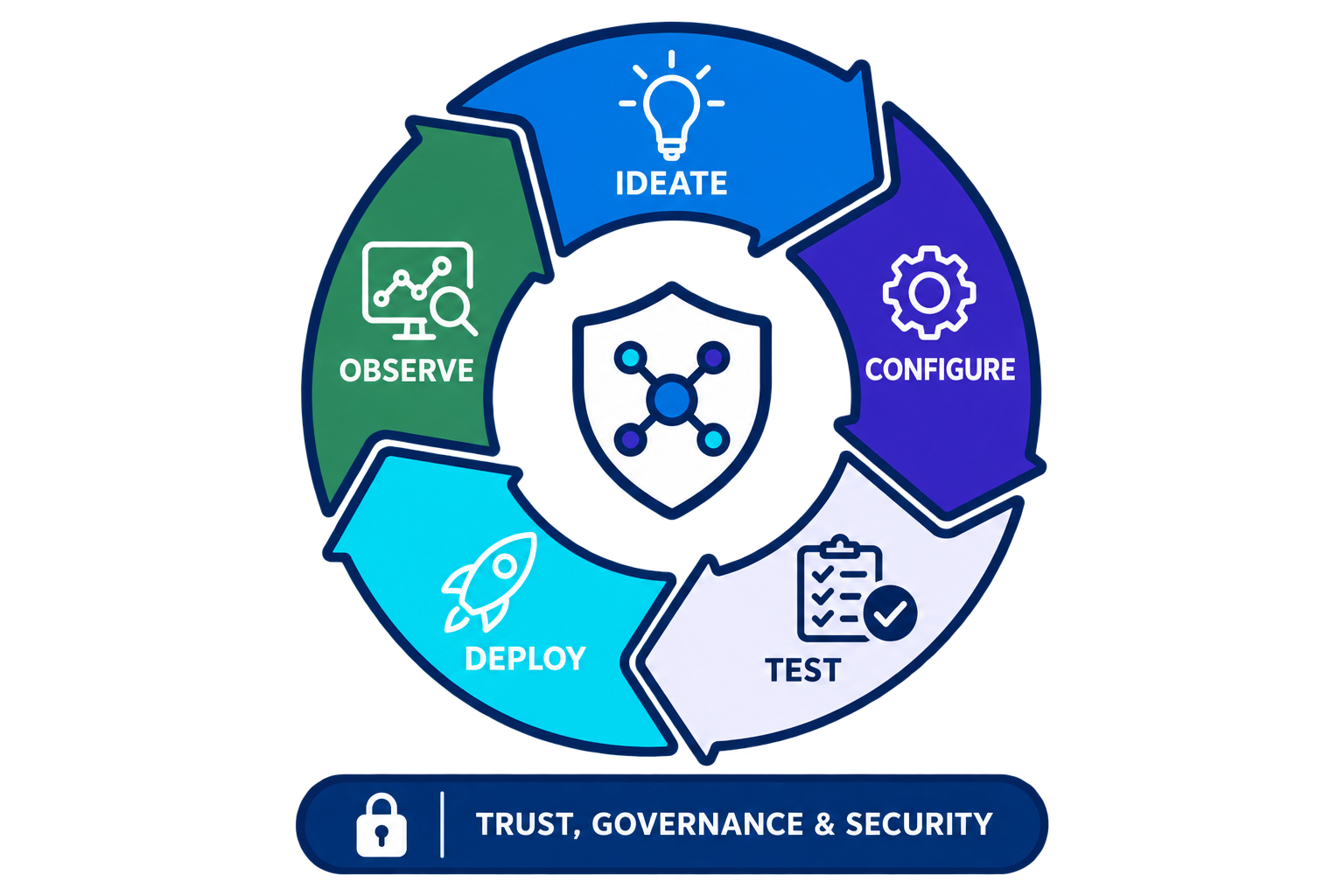
Define good before you build
- Write down the success criteria and acceptable thresholds before the pilot starts, not after results arrive.
- Treat the pilot as the source of your first baseline for quality, cost, and escalation behavior.
- Expand one variable at a time - audience, then channel - so you can attribute changes in behavior.
- Keep a rollback path ready at every stage so a bad release can be contained quickly.
Run the rollout in stages
- Activate the agent for a small pilot group on one channel and let it accumulate enough sessions to be statistically meaningful.
- Review pilot traces, test results, and user feedback against the predefined thresholds before approving the next stage.
- Record pilot metrics as the baseline and compare every later stage and release against them.
- Widen to more users and channels only after each stage passes, and pause or roll back when indicators move the wrong way.
Resources
This article is based on the following Salesforce learning and product documentation.