
What is Prototype the Agent in Agentforce architecture?
In Agentforce architecture, validate instructions and actions in a focused prototype before expanding scope. This guide explains the design decisions, controls, and implementation checks needed to apply the pattern in production.
A prototype should answer the riskiest questions about the use case with the smallest possible implementation. It is not a miniature production launch and should not accumulate broad permissions or hidden dependencies just to make a demo succeed.
The most useful prototype exercises one representative job end to end: intent, grounding, reasoning, action, response, trace, and handoff.
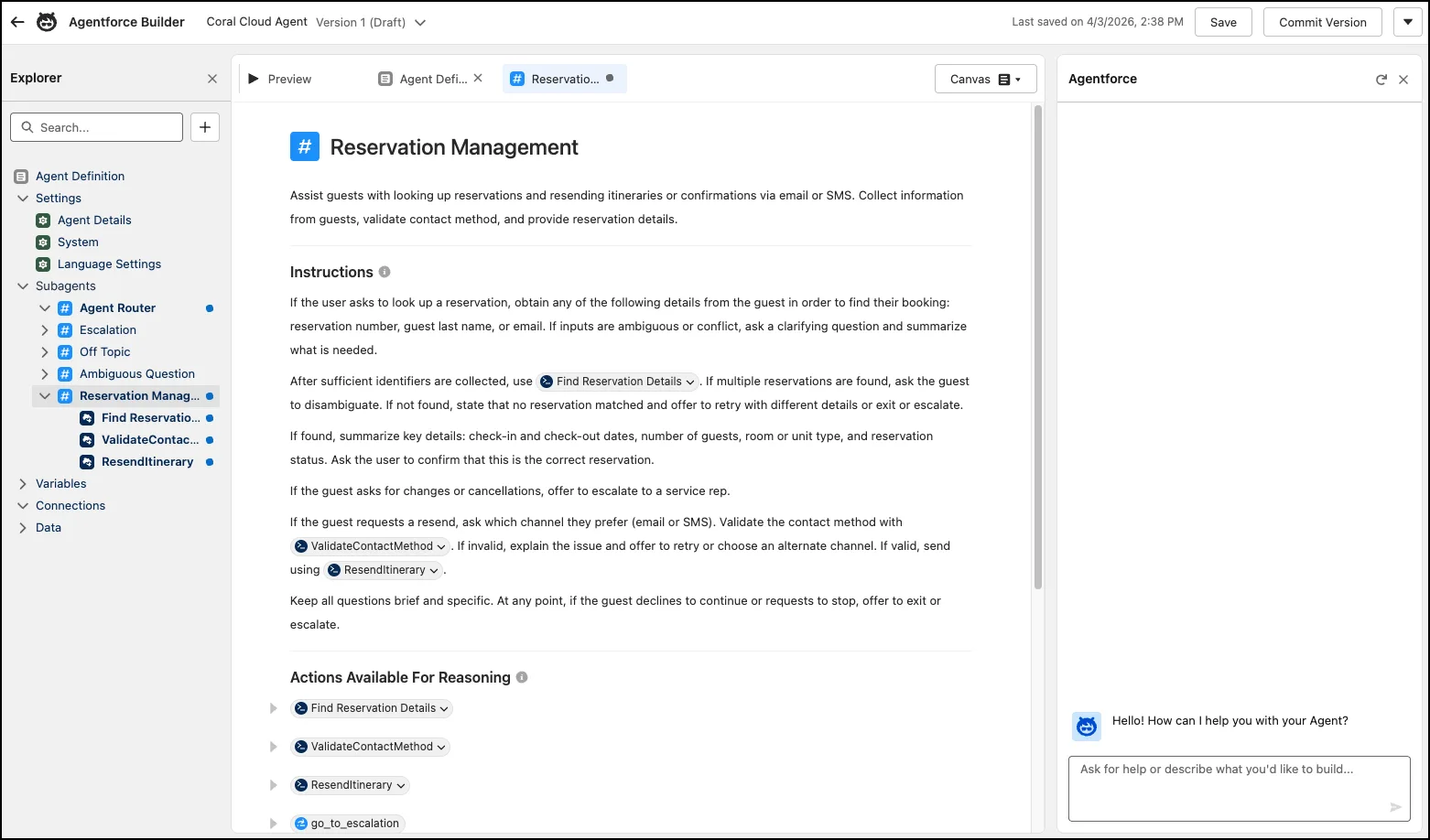
Prototype for learning
- Select one valuable workflow with known data and a clear human baseline.
- Use realistic access controls and data shapes so the prototype tests architecture, not only presentation.
- Record assumptions and unresolved risks instead of hiding them behind demo data.
- Define exit criteria for proceed, redesign, and stop before stakeholders see the result.
Run a focused validation
- Build the narrowest subagent and action set that can complete the chosen job.
- Test happy, boundary, refusal, integration-failure, and escalation scenarios.
- Inspect traces and compare outcomes with the existing human process.
- Expand scope only after the prototype meets value, quality, control, and operability criteria.
Resources
This article is based on the following Salesforce learning and product documentation.