
What is Prompt Design Fundamentals in Agentforce architecture?
In Agentforce architecture, write grounded, specific prompts that use CRM context without leaking sensitive data. This guide explains the design decisions, controls, and implementation checks needed to apply the pattern in production.
A useful prompt gives the model a clear task, relevant context, explicit constraints, and a defined output. It should reduce ambiguity without pretending that wording alone can enforce security or transactional limits.
Prompt design is therefore one layer of the system: it shapes behavior inside boundaries established by permissions, retrieval scope, action filters, backend validation, and human oversight.
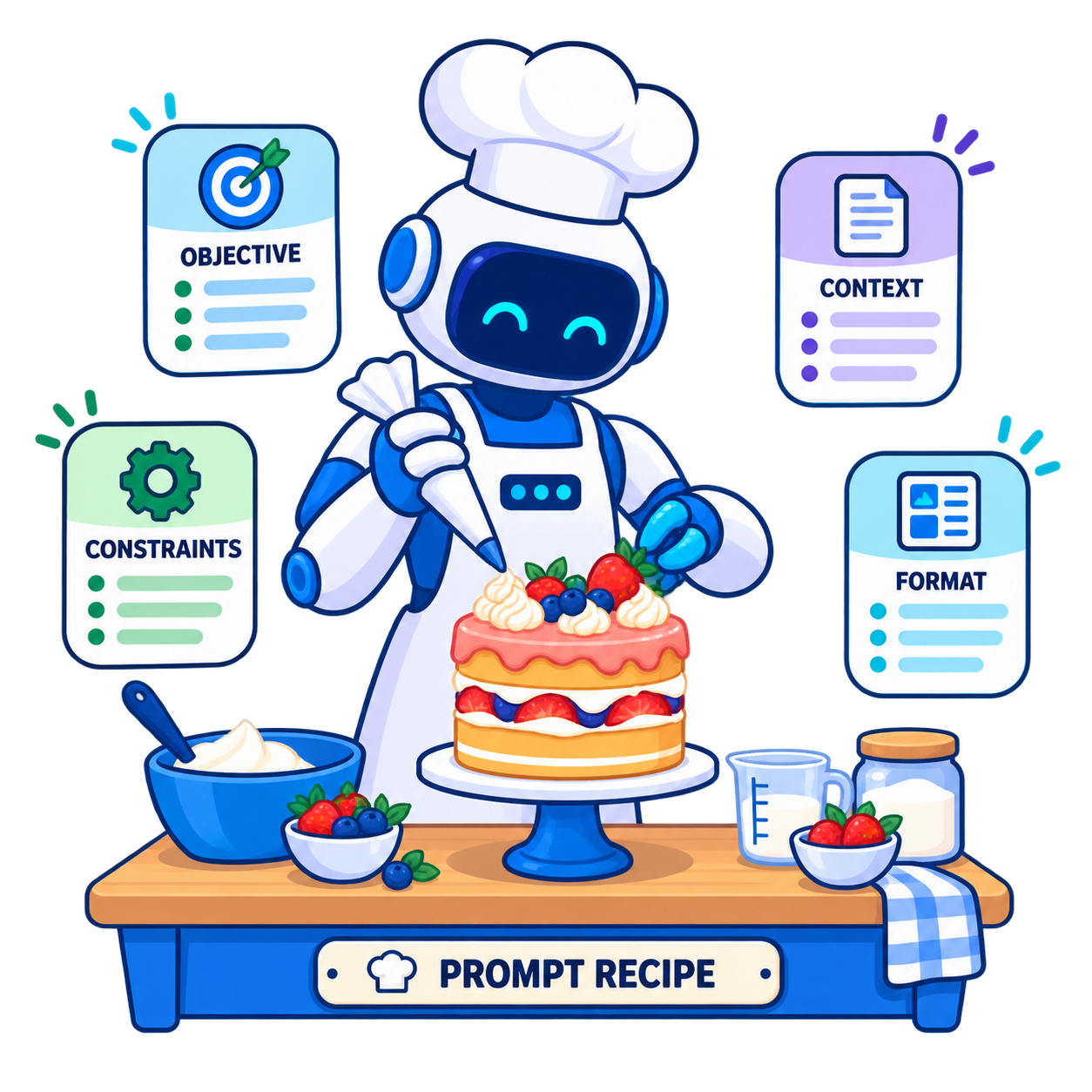
Write prompts for reliable interpretation
- State the role, task, audience, context, constraints, and output format explicitly.
- Ground the request in trusted, minimal CRM context rather than copying broad records into the prompt.
- Separate instructions from untrusted user or retrieved content to reduce injection risk.
- Avoid using prompts to enforce limits that must hold deterministically.
Improve prompts with evidence
- Start from representative user jobs and define what a correct output must contain and omit.
- Test paraphrases, missing context, conflicting context, hostile instructions, and sensitive-data requests.
- Inspect retrieval and action traces before rewriting a prompt for failures caused elsewhere.
- Version prompts and rerun regression criteria after each change.
Resources
This article is based on the following Salesforce learning and product documentation.