
Whatever the retriever can reach, the model can repeat. An agent grounded on a data library will confidently surface any content in that index, including outdated policies, draft documents, and material that was never meant to leave a restricted folder.
Most grounding failures are not model failures. They are content lifecycle failures: no owner, no review date, no eviction path. Hygiene means every source in the index has a named steward, a scheduled review, and a working way to remove content when it goes stale or turns out to be confidential.
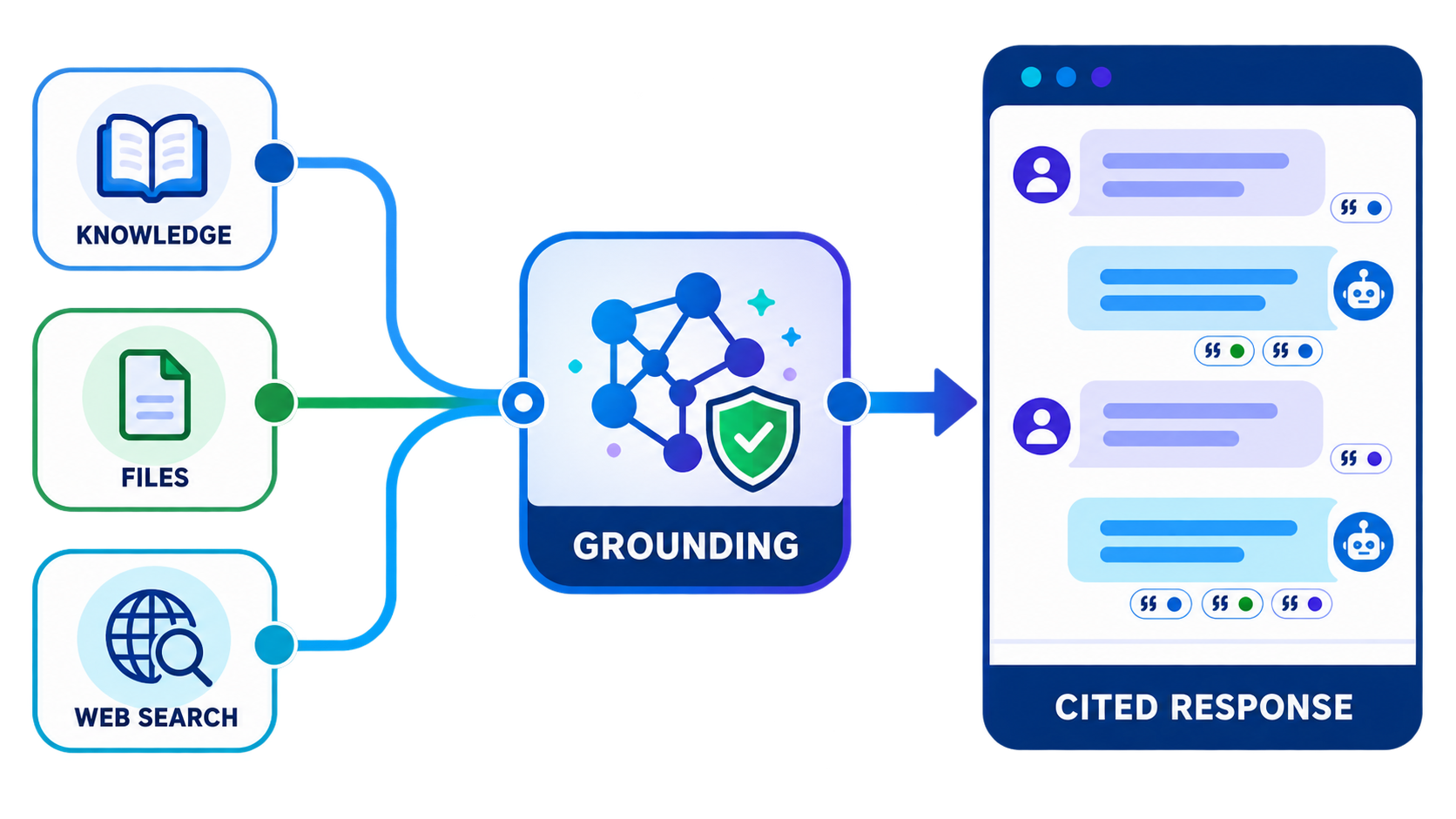
Treat the index as a governed dataset
- Every grounding source has a named owner who approves inclusion and answers for its accuracy.
- Each source carries a review cycle matched to how fast the underlying content changes.
- Retention rules define when content expires, and expiry triggers actual removal from the index, not just a flag in a spreadsheet.
- Confidentiality classification happens before ingestion; content that should not be repeated never enters the retrieval path.
Build the content lifecycle
- Inventory every source feeding the Agentforce Data Library and record owner, classification, review date, and retention rule for each.
- Restrict indexing to curated libraries and verified permissions rather than broad org-wide search scopes.
- Test eviction: remove a document from the source, confirm it disappears from retrieval results, and measure how long that takes.
- Schedule recurring reviews where owners re-approve or retire content, and audit agent responses for citations of stale or restricted material.
Resources
This article is based on the following Salesforce learning and product documentation.