
Happy-path testing proves the agent can work. Failure testing proves the business can survive it. Actions time out, APIs return errors, credentials expire, and upstream orgs change - and each failure either degrades gracefully or corrupts data and erodes trust.
Agents amplify this because they chain actions autonomously. A single untested failure path can cascade into wrong records, duplicated transactions, or a stuck conversation with no escalation route. Testing the bad day end to end is what turns these scenarios from incidents into rehearsed, controlled outcomes.
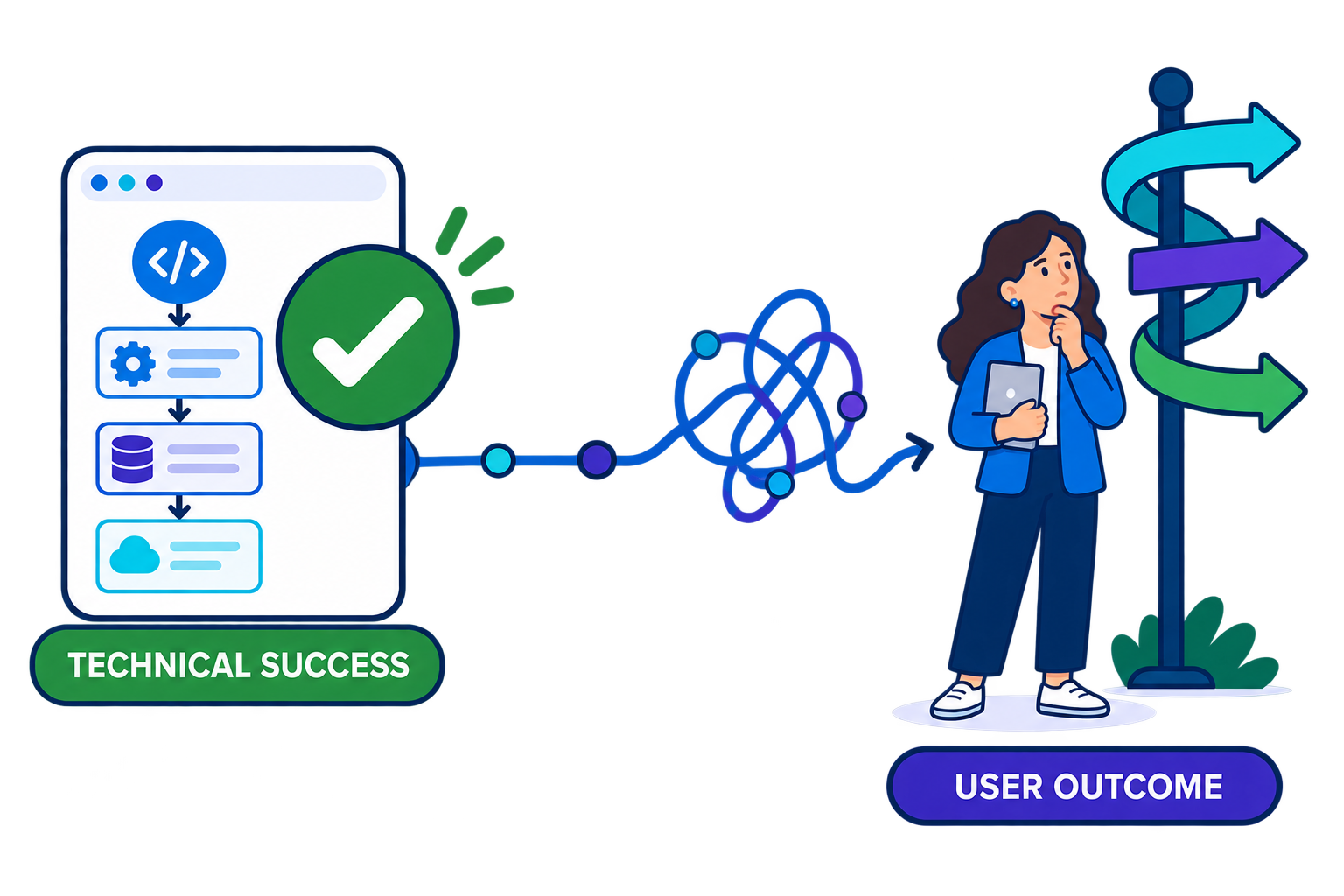
Design for the bad day
- Treat every action, integration, and credential as a component that will eventually fail in production.
- Define the expected behavior for each failure: retry, escalate to a human, roll back, or stop safely.
- Rollback means restoring data and state, not only redeploying an older agent version.
- Version drift between the agent, its actions, flows, and target orgs is itself a failure mode to test.
Run end-to-end failure drills
- Force each action to fail in a sandbox and verify the agent escalates cleanly, logs the failure, and leaves data consistent.
- Test credentials at minimum scope and confirm expired or revoked access fails closed, never open.
- Rehearse rollback: revert the active agent version and confirm prior conversations, records, and state stay intact.
- Track dependencies on target orgs and repeat a structured pass, such as Salesforce's five-step testing strategy, after every release, sandbox refresh, or package upgrade - and keep the evidence.
Resources
This article is based on the following Salesforce learning and product documentation.