
What is Deploy an AI Agent in Agentforce architecture?
In Agentforce architecture, prepare dependencies, permissions, channels, and release steps for deployment. This guide explains the design decisions, controls, and implementation checks needed to apply the pattern in production.
Deploying an agent is more than moving configuration. The release includes subagents, actions, Flows, permissions, data connections, channel setup, test evidence, monitoring, and an operating team prepared to respond.
Because environments differ, deployment verification must confirm effective behavior in the target org rather than assuming that a successful package transfer preserved every dependency and active version.
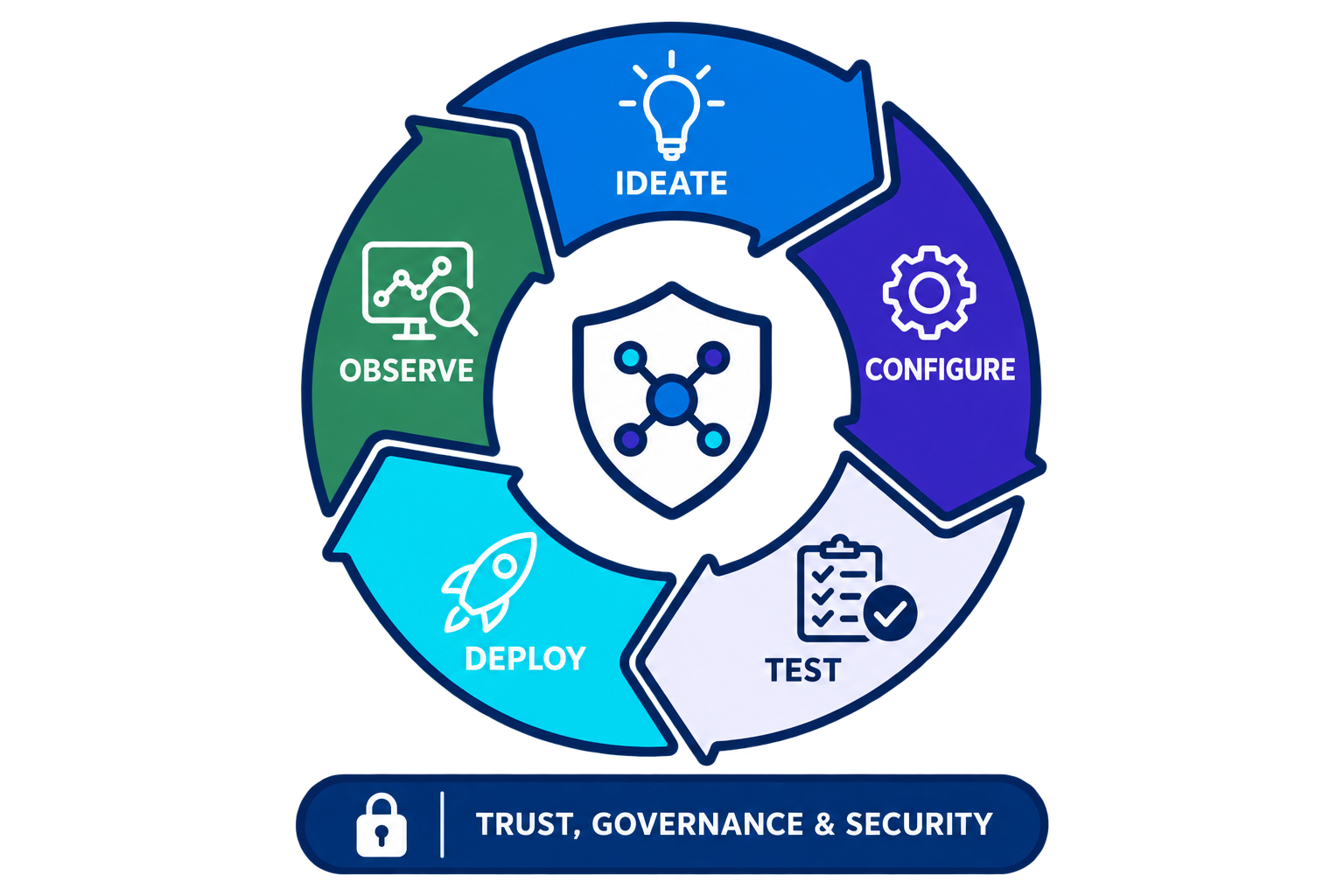
Treat deployment as an operational release
- Inventory dependencies and active versions before promotion.
- Verify the agent execution user, permission sets, sharing, and field access in the target environment.
- Keep channels and broad audiences disabled until smoke tests and monitoring are ready.
- Define rollback, escalation, and ownership before the first production session.
Release with controlled exposure
- Deploy to a staging environment and run the production-shaped regression suite.
- Verify actions, integrations, knowledge sources, credentials, and error paths end to end.
- Roll out by pilot group or channel while watching quality, health, trust, and escalation signals.
- Expand only when thresholds hold; pause or roll back when critical controls fail.
Resources
This article is based on the following Salesforce learning and product documentation.