
An agent is a non-human worker that reads data and takes actions on behalf of the business. Like any delegated authority, it needs a written mandate: what it may access, what it may do, under whose identity it runs, and when it must hand off to a human.
Without a signed mandate, scope creep happens silently. New topics, actions, and channels get added because they are easy to ship, and nobody owns the risk they create. The mandate fixes the baseline: it makes every change a conscious decision and gives auditors, incident responders, and reviewers a single reference for what the agent was approved to do.
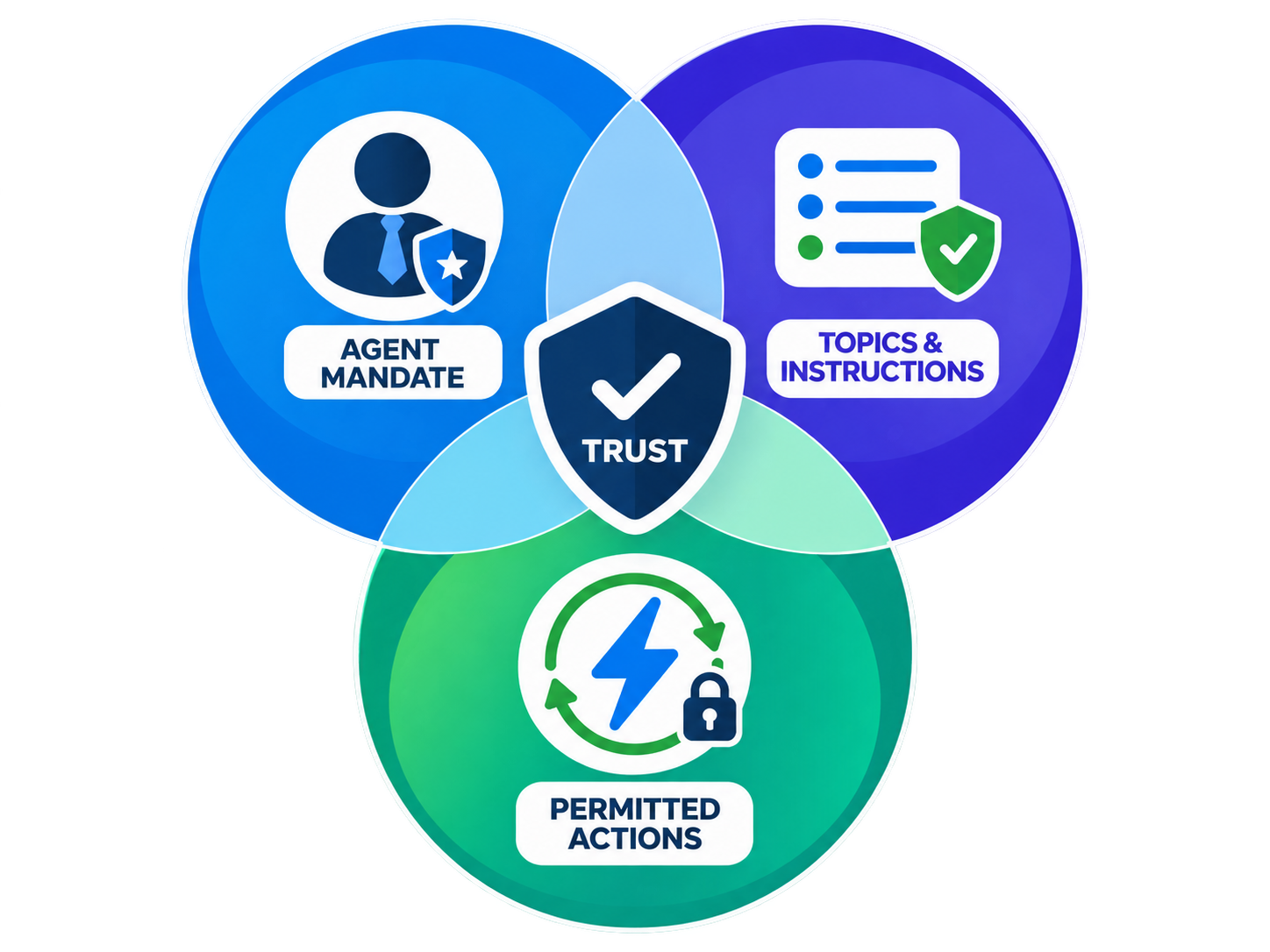
Delegate authority, not blame
- The mandate is signed by whoever owns the risk, typically the business process owner, not the builder.
- It names the execution context: which agent user, permissions, and data access the agent operates with.
- It defines human handoff conditions explicitly, including escalation triggers and fallback behavior.
- It is versioned, so every change to scope, access, or autonomy is traceable to an approved revision.
Write, approve, and version the mandate
- Document the agent's purpose, allowed topics and actions, data boundaries, and channels in one artifact.
- Have the risk owner sign it before production and re-approve on any material change to scope or autonomy.
- Map the mandate to technical guardrails: agent user permissions, topic instructions, and action allowlists.
- Store each version with the approval record, review the mandate on a fixed cadence, and retire it formally when the agent is decommissioned.
Resources
This article is based on the following Salesforce learning and product documentation.