
What is Define the Agent Guardrails in Agentforce architecture?
In Agentforce architecture, use the People, Business, Technology, and Data framework to document operational boundaries. This guide explains the design decisions, controls, and implementation checks needed to apply the pattern in production.
An agent should not enter production with a vague instruction to be helpful and safe. It needs a written mandate: the people it serves, the business outcomes it may pursue, the systems it may touch, and the data it may use.
The People, Business, Technology, and Data framework turns that mandate into reviewable boundaries. It exposes risks before configuration begins and gives architects, security teams, and business owners a common language for deciding what the agent must never do.
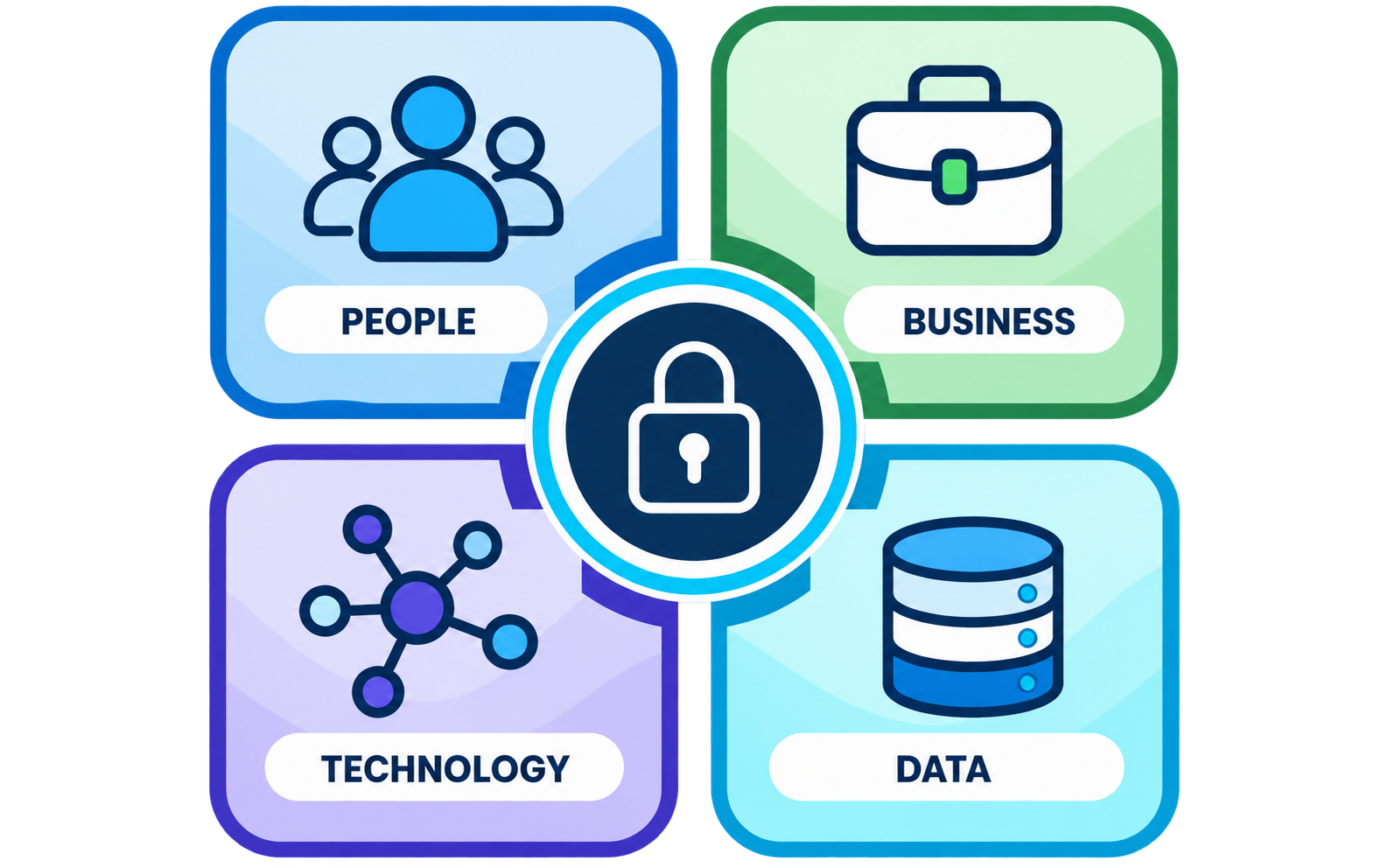
Four guardrail conversations
- People: define the users, affected stakeholders, human handoffs, and situations where a person must make the final decision.
- Business: document the approved jobs, financial limits, customer promises, and outcomes that remain outside the agent's authority.
- Technology: identify actions, integrations, failure modes, latency limits, and controls that must be deterministic rather than prompt-based.
- Data: list permitted sources, sensitive fields, retention expectations, grounding scope, and the execution context used to enforce access.
Turn the framework into enforceable boundaries
- Write a one-page agent mandate and assign a named business owner to every boundary.
- Map each hard rule to a permission, action filter, Flow, Apex rule, or human approval gate.
- Create negative test cases for requests the agent must refuse or escalate.
- Re-run the review whenever actions, data sources, channels, or the execution user change.
Resources
This article is based on the following Salesforce learning and product documentation.